A change in pace
The last couple of posts have been more focused on racing and advanced skills. This week, we will shift to surviving the urban environment and discuss how to ride safely in the city. There is a wealth of information about the challenges of urban cycling but I’d encourage readers to start with the Guardian’s cycling blog to catch up on all things about cycling commuting and advocacy.
Why ride in the city
As a major urban centre Toronto is a pretty safe place to ride (although not all would agree with that statement). But, why would any sane person venture into the car-centric infrastructure of Toronto?
That’s certainly a legitimate question but once you get over the initial reaction it starts to make sense. Commuting and running errands by bike is a fun, healthy and lets you see your town in a new and interesting way. A bike can get you to the grocery store, concerts, to school or work—you name it.
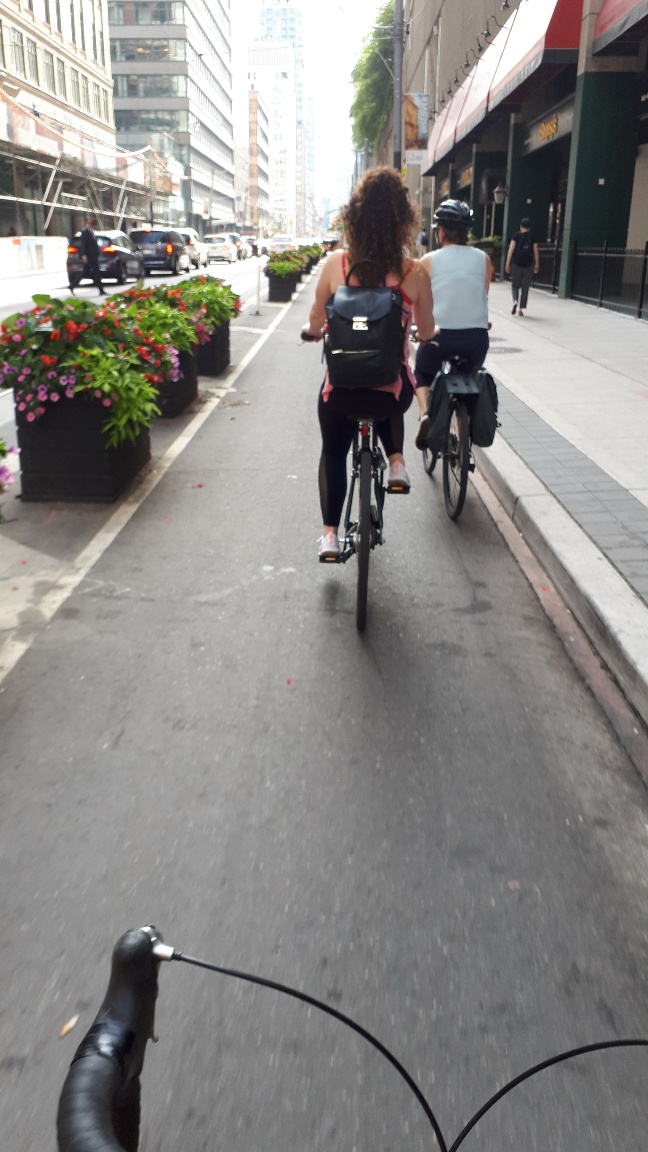
Finding the best route
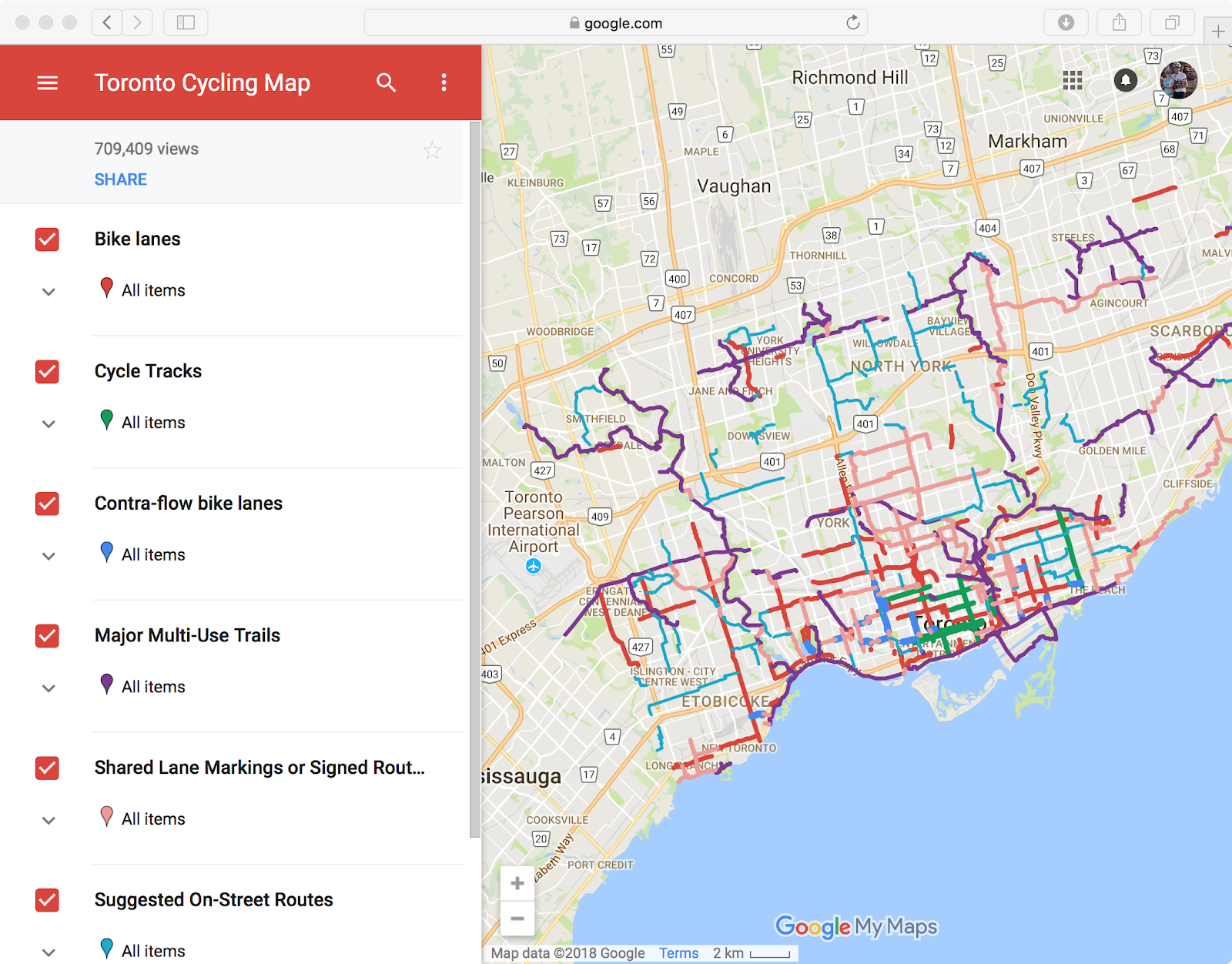
Riding in the city in a way that you find safe can mean a complicated mix of bike lanes, residential streets and paths. The City of Toronto Bike Map is an interactive map of the city’s bike network that shows all the cycling infrastructure in Toronto separated by type.
Be bright, be seen
Let me state clearly – I’m not going to suggest that cyclist cover themselves in neon yellow and safety vests. In my opinion, this suggests that the onus of safety and responsibility for a potential accident lies with the cyclist on the 30-pound bike rather than the operator of the 1-tonne vehicle.
If you can’t see the human being riding a bike in the city, you shouldn’t be driving a car.
That said, I do think lights are important, particularly on busier roads and higher speed roads. I like Knog lights because they’re quick to clip on and rechargeable over USB. Take them off before you lock your bike up outside though, they’re an easy target for thieves.
The bike lane does not bestow powers of invincibility unto you
There are times that is seems as though people think that bike lanes are a magic carpet ride through the city that makes them invincible.
They don’t.
In fact, they can almost be more hazardous because of this. In addition to cars merging into you, turning in front of you, coming out of driveways or flinging their doors open there are also pedestrians blithely stepping off the curb and of course…other bikes.
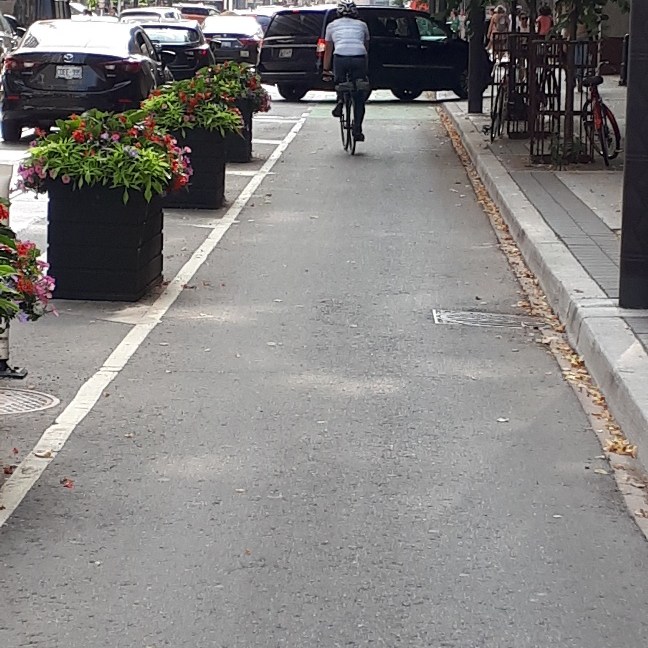
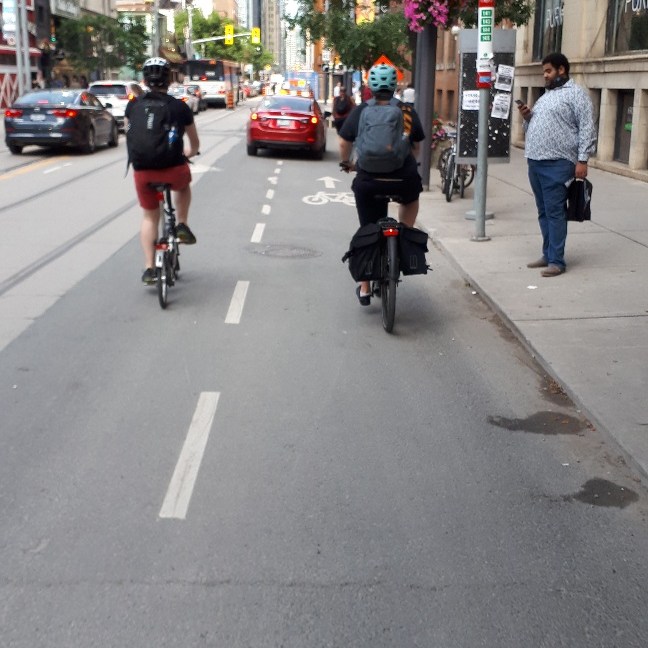
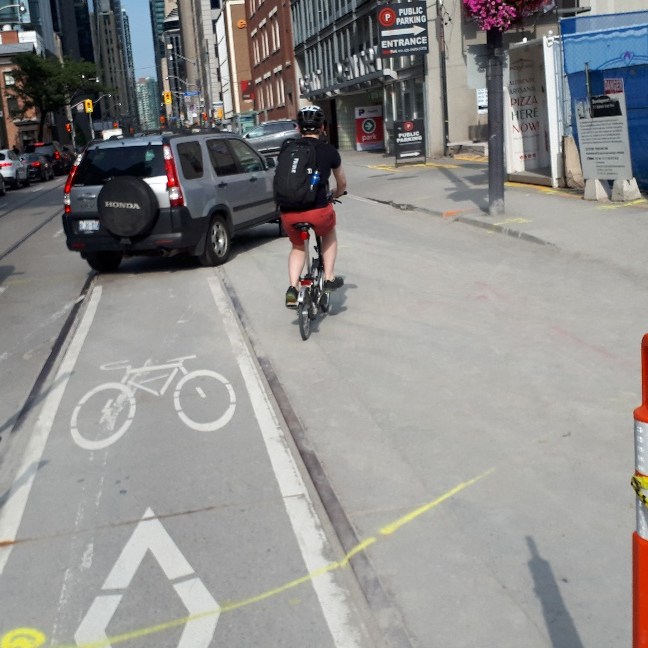
The bike lane, at best, offers limited protection – stay alert.
When the first few weeks of warm weather hits bike lanes are teeming with eager but novice riders. Often these well-intended riders don’t follow the same standards as year-round or near year round riders and can make life a bit unpredictable but, with patience and caution, you can get where you’re going safely.
Assume you are invisible
Riding in the city means you have to be hyper-aware of the world around you. Assume that no-one can see you and, if they can they are still going to turn or stop in front of you. Beware of the car beside you that may turn right, the car pulling out, or the door of the parked car. Put yourself in a safe position with room between you and the vehicles around you, don’t get caught in the blind spot of a car or worse a truck.
And always keep a reasonable speed and have an exit plan – if something unexpected happens you should already know where you want to go.
Carrying Stuff
Part of the beauty of riding is you can go anywhere and do anything – the coffee shop, work or groceries – the world really is your oyster.
But even a simple errand means you may have to carry something on your bike. Here are a few options:
- A back or messenger bag: For light loads and short trips you can just swing off your bike when you get to your destination and go. But beware of the sweaty back
- Front basket: You can get euro and urban with a front basket. One of my favourites is an old race bike with flat bars and a basket. It keeps the bikes handling as intended and lets you keep an eye on your stuff..
- Rear rack and panniers or basket: For heavier loads over longer distances you can use a pannier that clips on and off and looks like shoulder bag. These are best for commuters and committed urban cyclists but can affect the handling of the bike by making the back end a bit heavy.
- Cargo bikes: For bike messengers or parents with a basket full of kids. Even the best cargo bike is a bit cumbersome but hey, it’s still better than driving.
Lock it or lose it!
Bike theft is a fact of life. People will steal anything and everything. Your best defense is to get the best lock and use it every single time you leave your bike.
Every. Single. Time.
Even then you may be out of luck if you run into a determined thief.
Video courtesy of Josh Weinstein
Don’t get fooled into thinking you can run into a store quick to grab your popsicle and leave your bike leaned up against a wall. Thieves can act lightning quick.
A light cable combination lock will do for short-duration parking outside a store and with a city bike you can keep it on your bike at all times.
For longer stints a heavy-duty U-lock is best.
Even better is to take advantage of secure bike parking services when available at events like concerts, sporting events and markets or park your bike inside your work.
Take off all your lights and bells, use a bolted seat post clamp, not a quick-release clamp and use a second lock or cable for your wheels.
Do we even need to mention it?
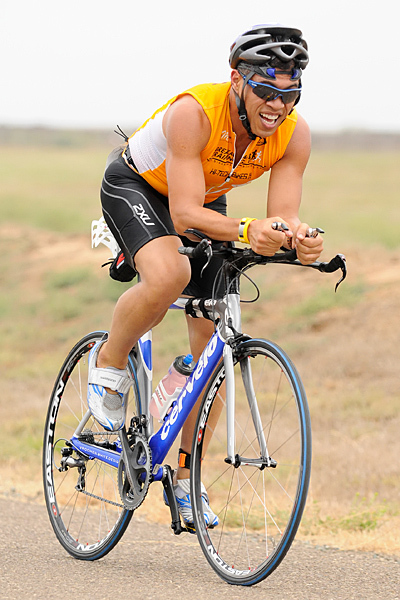
Wear your helmet. Make sure it fits, do up the straps tightly.
Make sure it’s not on backwards.
A good helmet fits snugly on your head, resting midway across you forehead. The straps should fit snugly.
A helmet can be found at bike stores, department stores or outdoors stores like MEC
Have fun
Most important is to have fun and enjoy yourself. Rome wasn’t built in a day and every crazy bike messenger started out as a wobbly novice.
Ease into it and start your urban riding with some weekend adventures to your local park, find some safe downtown routes after hours or on a quiet Sunday. Soon you’ll be the envy of other commuters stuck on their bus or in traffic.
Tell us what we’ve missed! What are some of your traffic misadventures and how did you stay up on two wheels?
Cover Image courtesy of the Toronto Archives
 Two Wheels Together
I’m always so nervous biking in Ottawa even with bike lanes. I’m working on navigating the bike scene here but for now. I’m sticking to my bike lanes.
LikeLike
Ottawa, my hometown! Two of my favourite paths were alongside the Ottawa river near the airplane museum and the experimental farm.
And of course Gatineau park, heaven on two wheels!
LikeLiked by 1 person