So here you are, you have an idea what the right bike for you might be, you’ve been looking at all different bikes for weeks, maybe you have even walked into a shop or two to browse. But, when the salesman approached and asked if you wanted hydraulic or cable disc brakes how could you not feel overwhelmed. What language is this guy speaking? You still don’t know a cassette from a spoke and it’s hard to make an informed choice when you don’t know the technical jargon.
In the next post, we’ll talk about the process of buying a bike. But first, let’s deal with breaking down the language barrier that’s getting in the way of that process. In this post, we’re going to cover the anatomy of the bicycle. This list is grouped by associated component, rather than alphabetically.
It all revolves around the wheel
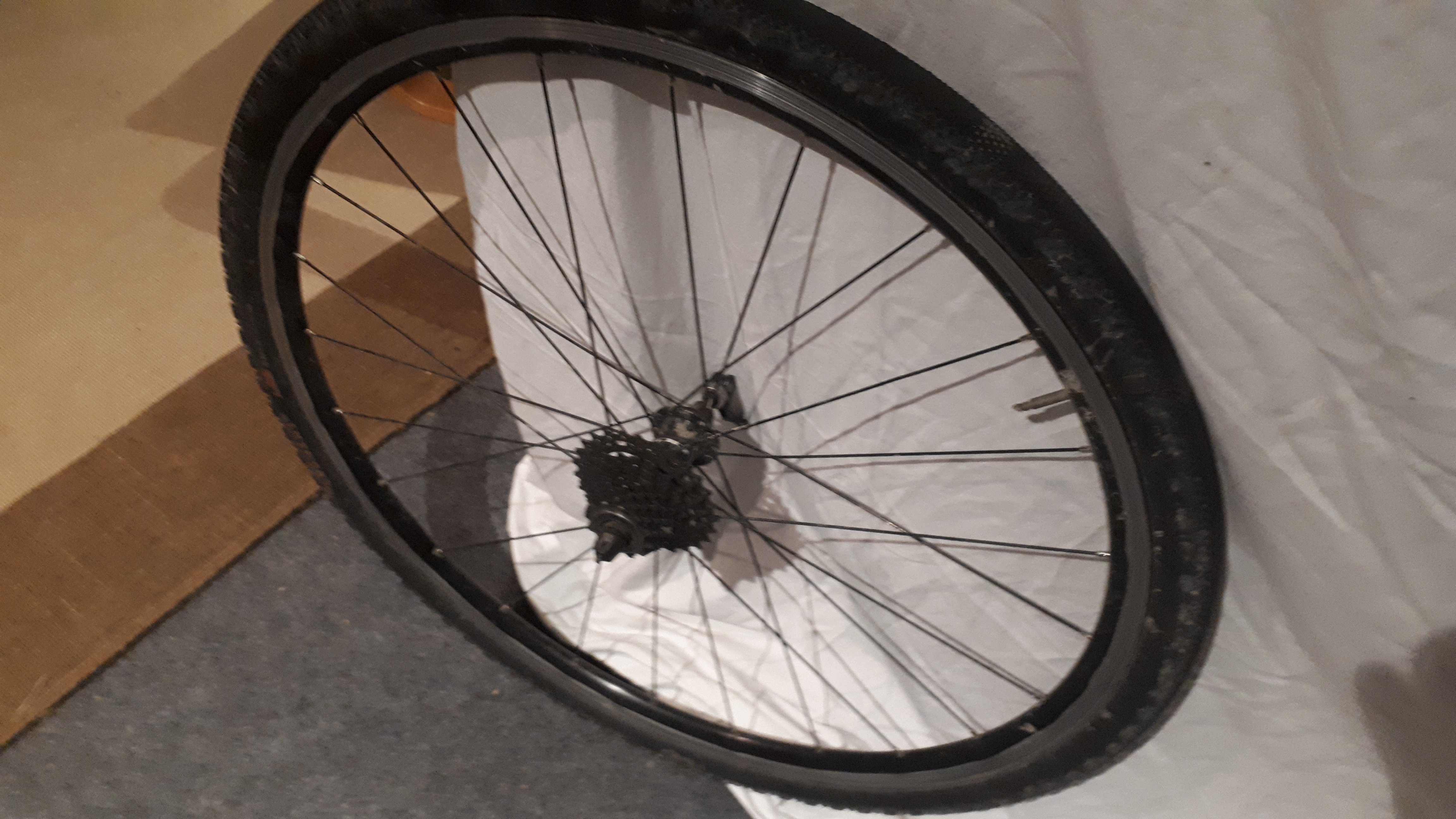
Wheel – the wheel makes the world go ‘round. What we refer to as the wheel is the complete assembly of the hub, spokes, nipples, and rim.
Hub – this is core component of the wheel to which the spokes are attached. Found between the dropouts it contains the axle and ball bearings.
Rim – this is the hoop part of a wheel that the tire rests on. It can be made of steel on lower end bikes, more commonly aluminum or, on higher end bikes, carbon fibre.
Spokes – the thin rod connecting the hub to the rim. The spokes usually have a J-shaped end that is looped through a slot in the hub. The other end is threaded, and a “nipple” is used to tighten or loosen the spoke to the rim.
Rim tape – usually a plastic tape is installed around the outside of a rim. It rests between the rim and inner tube and prevents the spokes from puncturing the inner tube.
Nipple – A small nut that holds a spoke in place on the rim of a wheel. A mechanic will turn the nipple to adjust the tension in the spoke. This will help “true”” the wheel, that is make it perfectly round.
Cassette – the cassette is the collection of gears that attached to the rear wheel. The cassette allows you to change gears and match your cadence (your pedaling speed) to the terrain.
Cog – a favourite of urban riders, a single cog takes the place of the cassette to make the bike a single-speed. The cog can either freewheel or be fixed, the latter meaning that the pedals move anytime the wheel does.
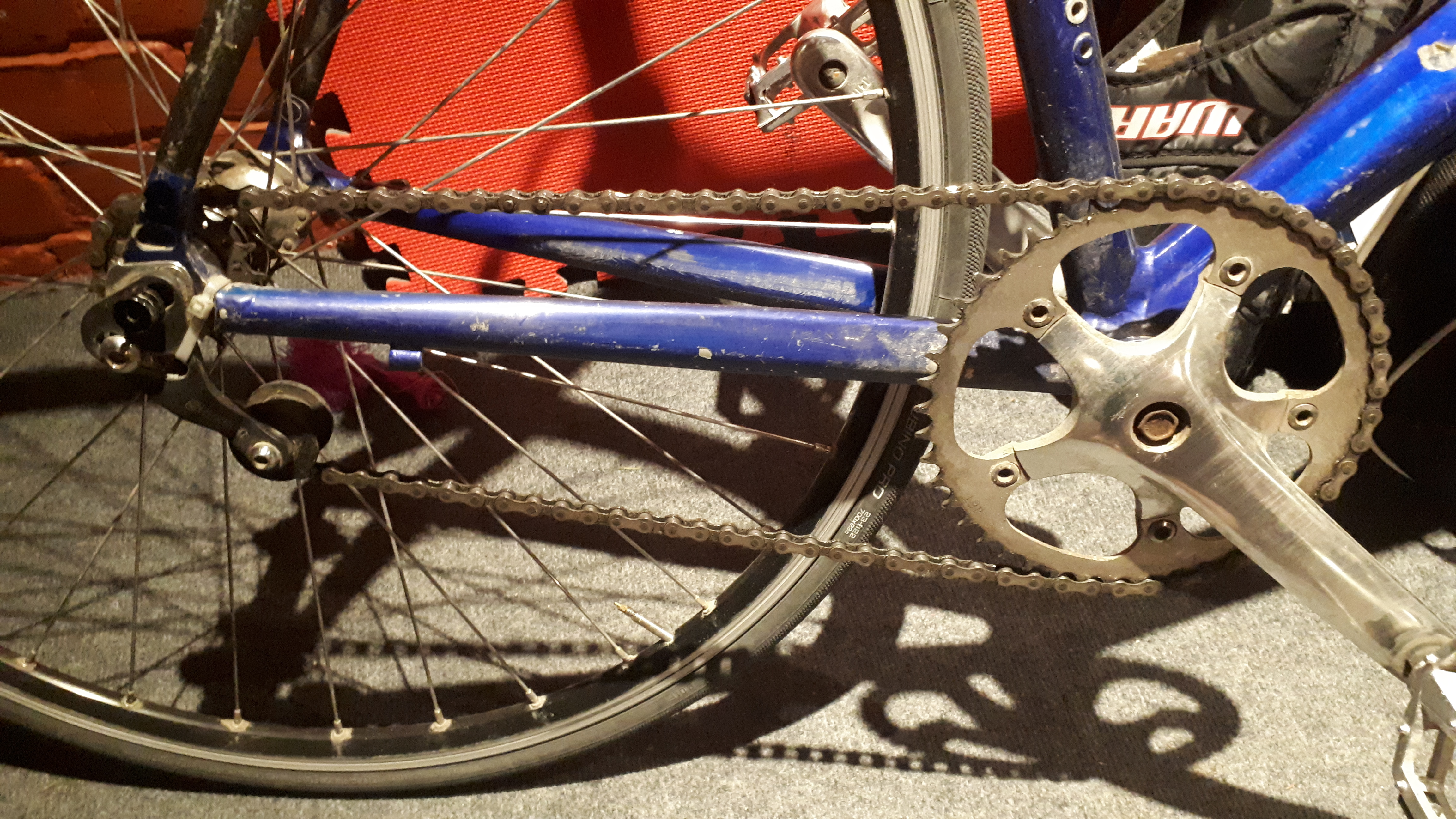
Brakes – the most important thing to remember is these are brakes, not breaks. They can be:
- caliper brakes commonly found on road-racing bikes,
- cantilever brakes the squeaky and hard to adjust brakes found on cyclocross bikes, or
- more commonly disc brakes found on newer styles of bikes and mountain bikes
The brake debate – caliper versus disc – has set the cycling world alight in recent years. One day, maybe one day, we may venture into this quagmire.
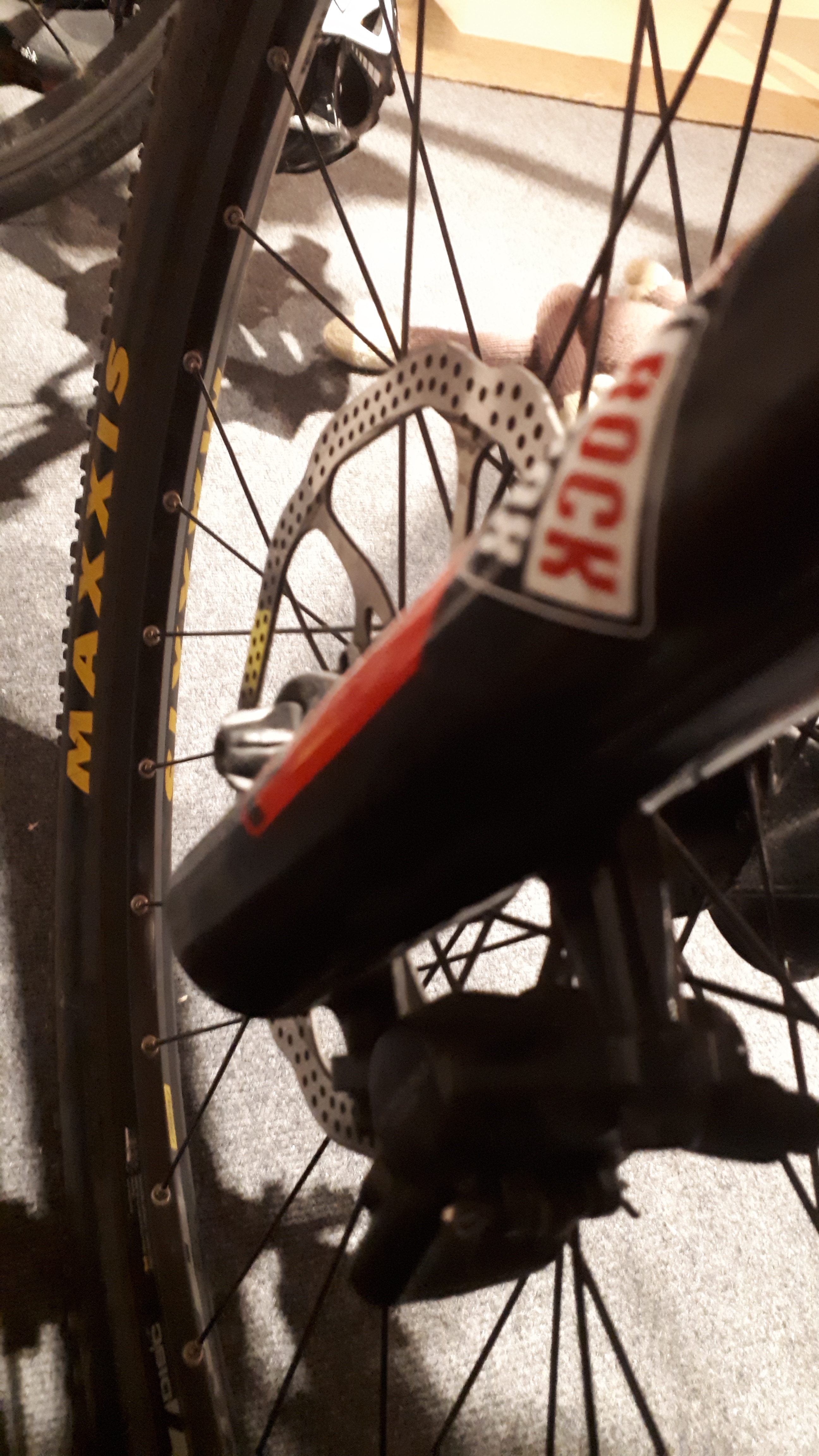
Gears, because it would just be too simple without
Crank arms – the crankarms are easily found as this is where the pedals are attached. The other end of the crank arm is attached to the bottom bracket spindle.
Chainrings – the crankarms also hold the chainrings. Usually two large gears attached to the right-hand crank-arm.
Derailleur – a bike can have two derailleurs. One near the chainrings and one near the cassette. The derailleur moves the chain from one gear to another. It is controlled by a shifter located near the handle bars. The one on the left shifts the front derailleur and the one on the right, the rear.
Derailleur hanger – this is where the rear derailleur is attached to the frame. On older steel bikes it is part of the frame. However, on newer bikes it is separate and replaceable allowing you to crash your bike with less concern for damage (to the bike at least).
Dropouts – these U-shaped notches at the bottom of the forks and rear of the frame hold the wheels in place. On newer bikes, the wheels are held in place with a quick-release skewer.
Pic of Gears
Every bike needs accessories
Cage – the term refers to the water bottle holder, which would be a mouthful to say often.
Cyclocomputer – a speedometer/odometer/powermeter and more this can also be referred to as the product name, often a Garmin (after the gps/fitness tracking company).
Handlebars
Drop bar – the type of handlebar found on road racing bikes. Recognizable by the half-circle-shaped curved ends that extend below the flatter top part of the bar.
Flat bar – a handlebar with little or no upward or downward curve; some flat bars will have a slight backward curve, or “sweep.”
Riser bar – a type of handlebar with a “U” shape in the middle popular on urban bikes, mountain bikes and most hybrid bikes.
Stem – the part that connects the handlebar to the frame. Always make sure you stem is in good shape and tightened. It is the only thing holding your handlebars to your bike.
Everything attaches to the frame…
Frame – 3 simple triangles make up every bike. The fork is one, and the other two are the main structural part of the bicycle. A frame can be steel, aluminum, titanium, or carbon fiber. It is comprised of a top tube, head tube, down tube, bottom bracket shell, seat tube, seat stays, and chain stays.
Fork – the two-legged part of the frame that holds the front wheel in place. It is made up of the fork legs and the steerer tube. The steerer tube extends through the frame and to which the stem is attached.
Where do I sit?
Saddle – for reasons beyond me…bikes don’t come with seats, they come with saddles.
Seatpost – yet, somehow, that saddles is connected to a seatpost which is fastened to the bike with a seatpost clamp, a collar around the seat tube of the frame.
There it is, all the parts and pieces of the bicycle. Please, let me know if it’s confusing – even having ridden a bike pretty much every day for years we still find ourselves thinking what side a shifter is on when explaining it to someone else.
Is there anything you find confusing? Any parts we left off our list? Let us know in the comments below or on Twitter.
 Two Wheels Together
1 thought on “Bike Anatomy 101”